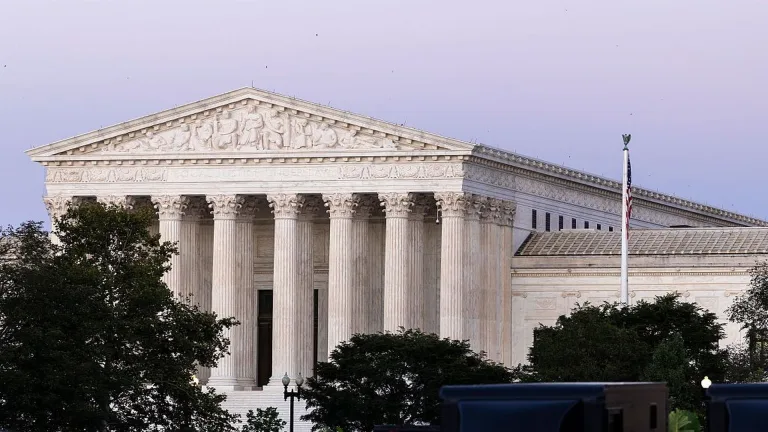
The ongoing battle over congressional redistricting in Missouri is back in the headlines as the Supreme Court prepares to hear the case for the third time. This contentious issue has significant implications for Missouri’s political landscape and representation.
Redistricting, which occurs every ten years following the census, is crucial as it determines how congressional districts are drawn, affecting electoral outcomes and political power. Missouri’s latest redistricting plan has faced legal challenges, with claims that it may undermine fair representation.
The Stakes of Redistricting
This latest round of legal scrutiny centers on allegations of gerrymandering, where district boundaries are manipulated to favor one political party over another. The Supreme Court’s decision could either uphold the current map or mandate a new, fairer arrangement, setting a precedent for future redistricting cases nationwide.
Legal experts suggest that the outcome may influence not only Missouri’s elections but also serve as a benchmark for other states grappling with similar issues. As states across the U.S. continue to navigate the complexities of redistricting, the implications of the Supreme Court’s ruling could resonate far beyond Missouri.
A History of Legal Challenges
This is not the first time this case has reached the Supreme Court. Previous rulings have underscored the contentious nature of drawing district lines and the challenges that arise when political interests clash with the principles of democracy. As Missouri residents await the Court’s decision, the focus remains on how these changes will impact voter representation and civic engagement.
For those living in Missouri or involved in political advocacy, the outcome of this case is critical. It highlights the importance of fair representation and could inspire similar legal challenges in other states, making this a pivotal moment in the evolution of U.S. electoral law.